How much does a tattoo at SpookySo cost?
At the studio, a small piece sits between €100 and €300, a medium piece between €300 and €450, a large piece between €450 and €600. Flash starts at €100, with the price shown on each design on the sheet. These are Sophie’s ranges, not a national average: in Belgium, tattoo prices vary from one studio to the next and from one region to another, depending on the artist’s experience and the time they give to each piece. A number on its own says nothing; what counts is what it covers.
At SpookySo, it covers everything: the preparation, the drawing, the single-use materials. Every project gets a written quote before the session, and nothing changes without talking it through.
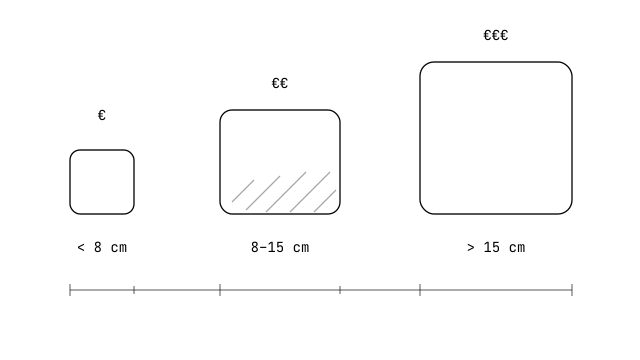
- Small piece: €100 to €300. Under 8 cm: symbol, short lettering, simple botanical.
- Medium piece: €300 to €450. 8 to 15 cm: most fine line and botanical projects.
- Large piece: €450 to €600. Over 15 cm or a full-day session: blackwork, ornamental, cover-up.
- Flash: from €100. A flash tattoo’s price is the most readable there is: it’s written under the design.
What makes the price of a tattoo vary
It’s the working time that sets the price, not the centimetres alone. A design packed with detail takes more hours than a large solid fill of the same size: ornamental lace is laid dot by dot, where a blackwork silhouette reads in masses.
Two projects of the same size can therefore get two different quotes, and that’s the sign of serious pricing: it describes your piece, not a line from a fixed menu.
- Size and detail: the more lines there are to place right, the longer the session runs, and the quote with it.
- Placement: ribs, hands and nape are worked more slowly, out of respect for the skin and for you.
- The number of sessions: beyond a single session, the project moves to an overall quote, set at the consultation and then paid session by session.
Why a session minimum, even for a small design?
Because the smallest tattoo calls for the same set-up as an hour-long piece. The workstation is prepared, the single-use materials are opened for you and thrown away after you, the drawing is lined up, the skin is disinfected: all of that happens before the first line, whatever the design.
The session minimum covers that base: preparation, drawing and materials included. It also protects what is never negotiable, hygiene. A studio that cuts corners there cuts corners on you.
The deposit, explained with no detours
The deposit is 30% of the price and is deducted from the total: it’s not an extra, it’s an advance. Nothing is due when you send your request; once the date is set, a QR code and the IBAN are sent to you to pay it by bank transfer. The balance is paid on the day of the session, by cash or bank transfer.
It isn’t returned if you cancel, because it covers the drawing already started: once the date is set, Sophie is working on your piece well before you arrive. A reschedule, on the other hand, stays free with more than 48 hours’ notice. Moving a session costs nothing; making it disappear does.
Why the cheapest often costs more
A tattoo is paid for once and worn for decades: spread over the years, the gap between two quotes weighs little. A piece laid down too fast or at the wrong depth ages badly, and fine line’s reputation for fragility comes from exactly that: pieces that were badly done, not the style itself.
Correcting always costs more than doing it well. A touch-up is scheduled once healing is complete; a cover-up is judged case by case and counts among the large pieces. Covering a botched tattoo often ends up costing more than the tattoo that was needed in the first place. The best quote isn’t the lowest: it’s the one that describes precisely what you’re going to wear.